
Ductable AC vs VRV/VRF: Which System Is Better for Your Space?
Compare ductable AC and VRV/VRF systems based on application, control, efficiency, installation complexity, and long-term maintenance.
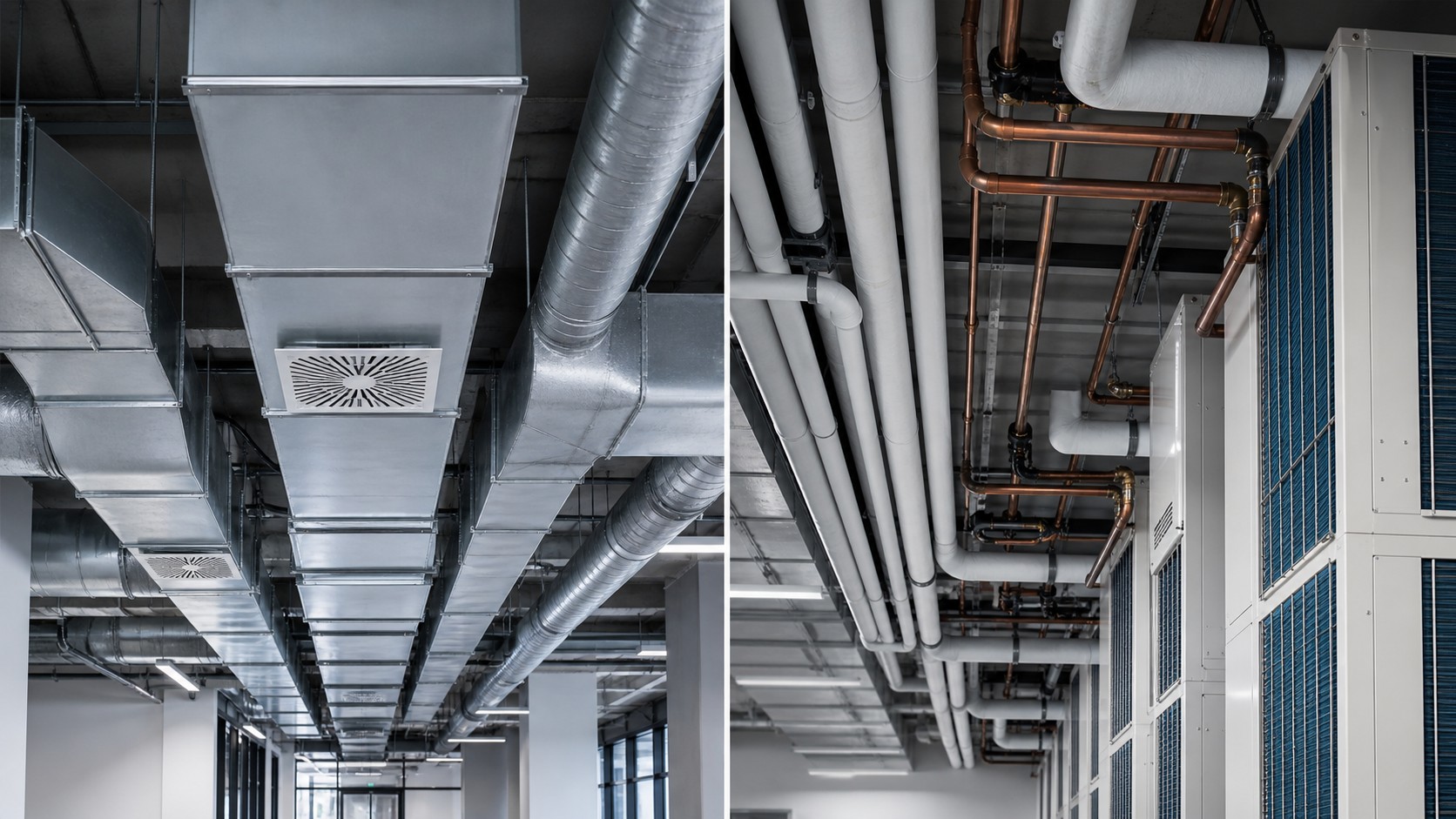
Both ductable AC and VRV/VRF systems can deliver effective cooling, but the right choice depends on building layout, zone control needs, budget, usage pattern, and long-term operating cost.
| Best Use | Large open areas or single-zone spaces | Multi-zone spaces with different occupancy patterns |
| Control | Usually centralized or limited zone control | Flexible zone-wise control |
| Installation | Requires ductwork and ceiling space | Requires refrigerant piping and careful design |
| Efficiency | Depends on system design and operation | Can be highly efficient with proper design |
| Maintenance | Filter, duct, coil, and unit maintenance | Indoor/outdoor unit and refrigerant circuit maintenance |
A professional HVAC assessment helps determine the most suitable system after evaluating heat load, occupancy, ceiling height, equipment placement, and future expansion needs.
Senior Project Engineer
Project Planning & Execution
Specializes in HVAC planning, site coordination, commissioning, and maintenance workflows for large facilities.
Related Articles

VRV/VRF Systems Explained: A Guide for Businesses
Understand how VRV/VRF air-conditioning systems work, where they are useful, and what businesses should consider before installation.

How HVAC Design Affects Comfort, Efficiency, and Maintenance
Good HVAC design improves comfort, reduces energy waste, makes maintenance easier, and supports long-term system reliability.

Choosing the Right AC Capacity for Your Space
Selecting the right AC capacity improves comfort, reduces energy wastage, and prevents frequent compressor cycling or poor cooling.
Need HVAC service support?
Get reliable installation and maintenance from Complete MEP Solutions LLP.